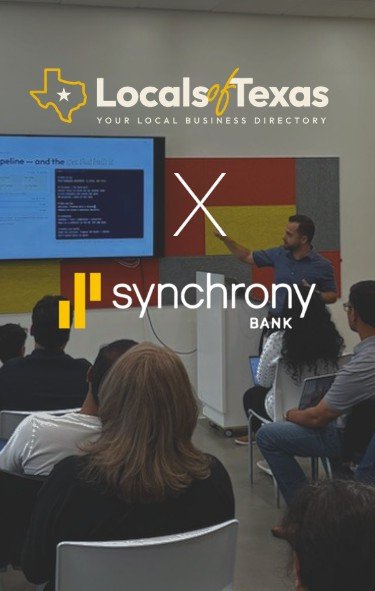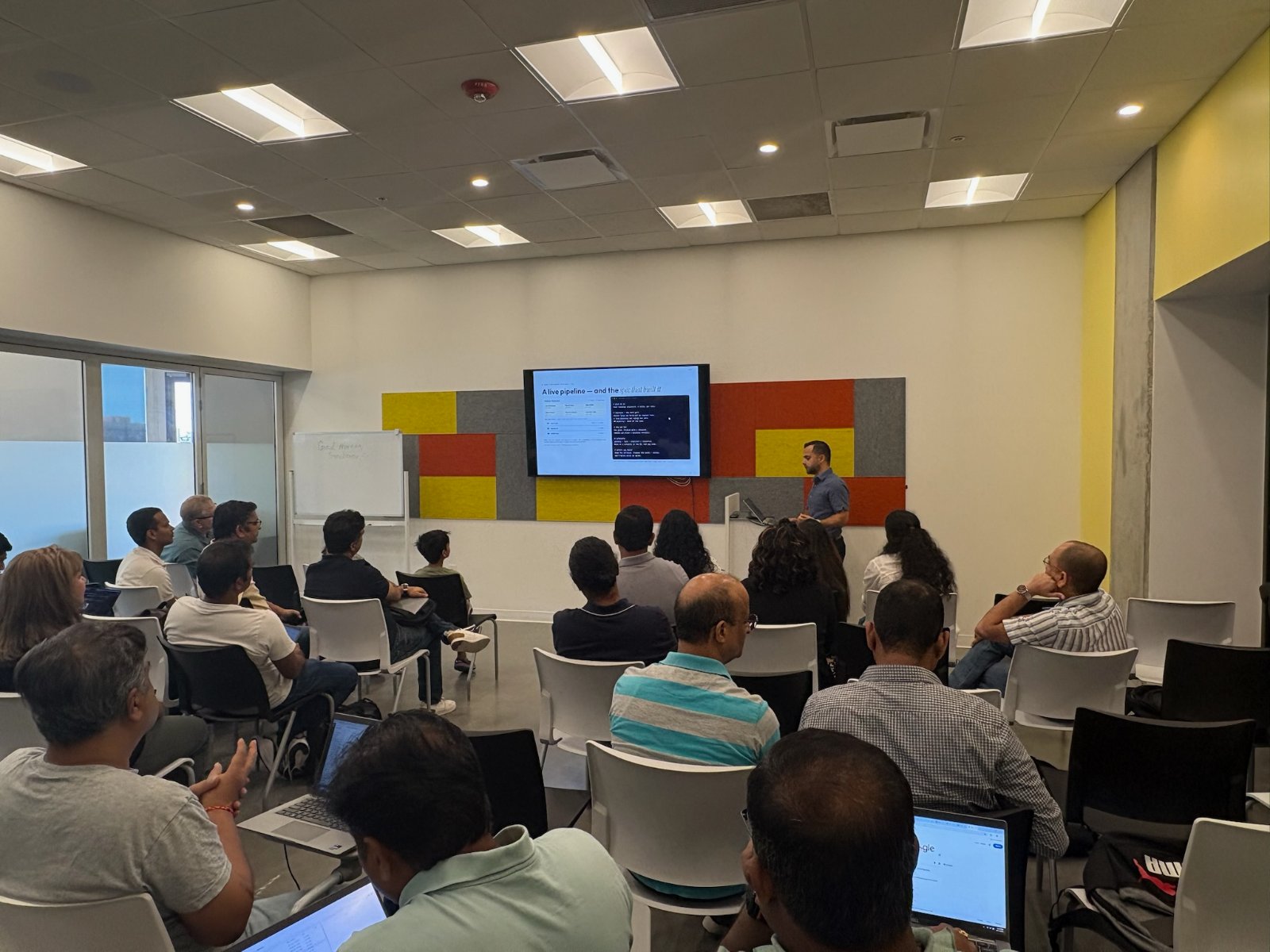
This week, Synchrony Financial's AI and tech hub in Texas invited us to get up in front of a community of developers, engineers, founders, and people building with artificial intelligence every day, and walk through exactly how we built Locals of Texas — Instead of asking us about marketing or business growth, they wanted something different.
They wanted to know how we built it.
Not just the technology.
The entire journey.
How an idea that started with countless frustrating searches for local businesses eventually became a platform helping Texans discover businesses they never knew existed.
It Didn't Start With AI
It started with a problem.
We've always loved supporting local businesses. Farmers markets, family-owned restaurants, home-based businesses, neighborhood shops. The kinds of places you usually hear about from a friend, not from a search engine.
But every time we tried to find one online, we kept running into the same wall.
You had to already know the business name.
Searching for what they actually do usually led to chain stores, paid ads, or businesses hundreds of miles away. Meanwhile, incredible local businesses stayed almost invisible.
After seeing this happen over and over again, we stopped asking, "Why is this so hard?"
We started asking, "Why hasn't someone fixed it?"
That's where Locals of Texas began.
Building Something That Didn't Already Exist
Creating a local directory sounds simple.
It isn't.
Finding businesses is one challenge.
Helping people discover businesses they didn't already know existed is an entirely different one.
Every decision forced us to rethink how local discovery should work.
How should businesses be categorized?
How do you make searching by service actually useful?
How do you verify listings without turning everything into an automated mess?
How do you build trust instead of simply collecting data?
Those questions shaped every feature on the platform.
AI Became Our Construction Crew
One of the biggest topics during the presentation wasn't the website itself.
It was how we built it.
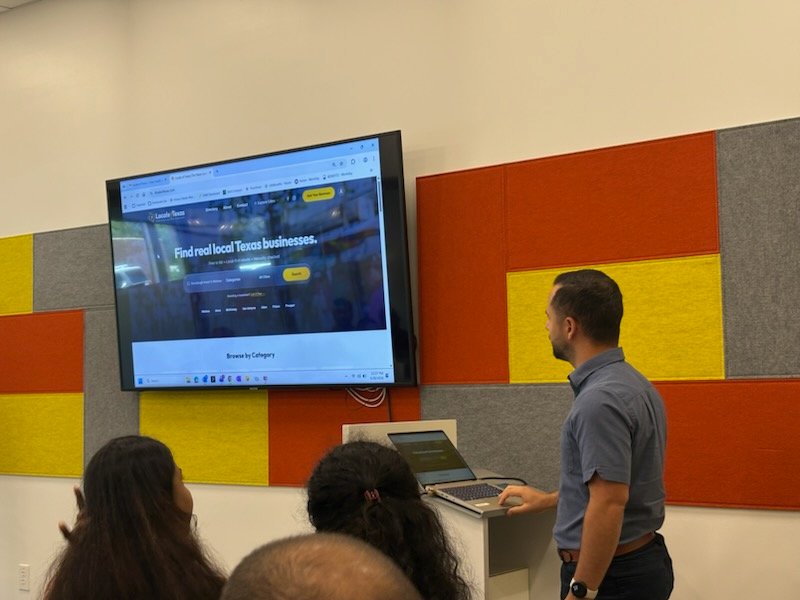
Instead of hiring a large software team, we used modern AI development tools, including Claude Code, as part of the engineering process.
That doesn't mean AI built the idea.
It didn't decide what problems to solve.
It didn't interview business owners.
It didn't spend weekends walking farmers markets or listening to people explain why they couldn't find local services online.
The vision, architecture, priorities, and thousands of product decisions still came from us.
AI simply became an incredibly capable development partner that helped us turn those ideas into working software much faster than would have been possible only a few years ago.
For many people in the room, that combination was the interesting part.
Not using AI.
Using it with intention.
Every Feature Solves a Real Problem
During the presentation we walked through feature after feature, but none of them began with technology.
Every one started with a real conversation.
A business owner struggling to get discovered.
A customer searching Facebook groups hoping someone would recommend a plumber.
A vendor who only exists at weekend markets.
A family-owned business that delivers amazing service but doesn't appear when someone searches for what they actually do.
Technology was never the goal.
Making those businesses easier to find was.
The Conversation Didn't End When the Presentation Did
What surprised us most wasn't the presentation itself.
It was what happened after.
The discussion quickly shifted away from software and toward community.
People started talking about businesses they love but struggle to find online. Favorite food trucks. Family-owned shops. Farmers market vendors. Skilled tradespeople whose entire business depends on word of mouth because they simply don't appear where people search.
That was the moment we knew the idea resonated.
Not because the technology impressed people.
Because the problem felt familiar.
From a Presentation to More Local Discoveries
Within days of sharing Locals of Texas with Synchrony's AI Hub community, we began seeing exactly what we hoped for.
People weren't just visiting the website to see how it was built.
They were using it.
Browsing nearby businesses.
Searching categories in their own cities.
Sharing local businesses with friends and family.
Discovering places they admitted they would've never found otherwise.
That's the outcome we've been working toward since the first line of code.
Every new visitor has the chance to discover a local coffee shop instead of another chain. A family-owned contractor instead of the company spending the most on ads. A weekend market vendor whose products deserve to be seen long after the market closes.
If a room full of engineers, developers, and AI builders walked away talking about local businesses instead of technology, then we accomplished exactly what we set out to do.
Technology was never meant to be the destination.
It's simply the bridge connecting Texans with the businesses that make their communities unique.
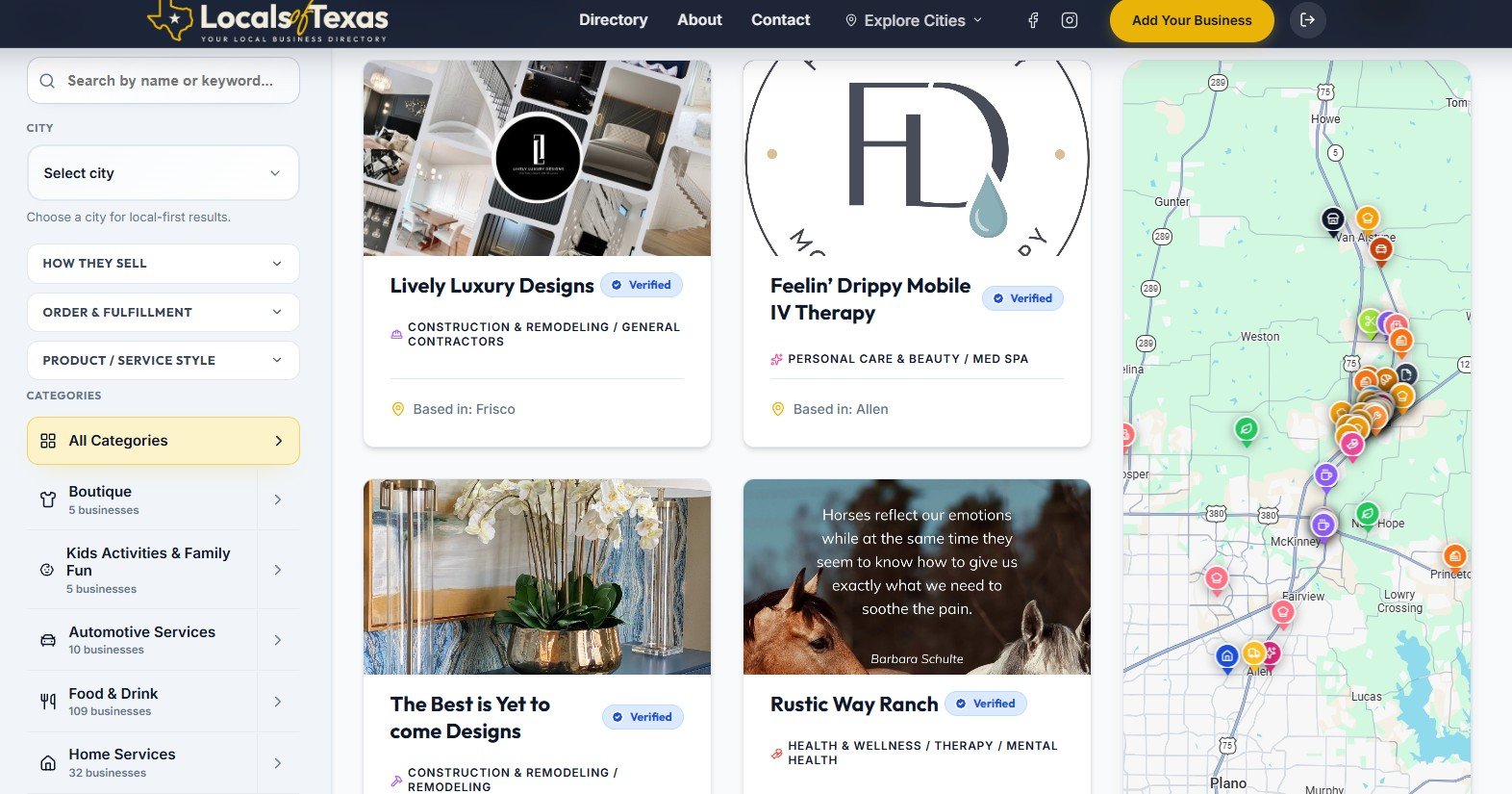
So if you haven't explored your own city lately, give it a try! Browse here.
Search for something you've been meaning to find. Browse a category you've never looked at before. You might discover a business just a few miles away that's been there all along, quietly waiting to be found.
That's why we built Locals of Texas.
And after sharing its story with the AI Hub, we're even more excited about where it's headed next.